

Most people experience their moral life as a series of “gut feelings.” When faced with a difficult choice, they wait for an internal signal—a sense of comfort or a pang of guilt—and they treat this signal as a divine or biological directive. In the language of systems engineering, they are treating their moral reasoning as a Black Box. They see the input (the dilemma) and they see the output (the choice), but they have no visibility into the mechanics occurring inside. This lack of transparency is a significant operational risk. If you do not understand the “How” of your reasoning, you are vulnerable to cognitive bias, emotional manipulation, and systemic inconsistency.
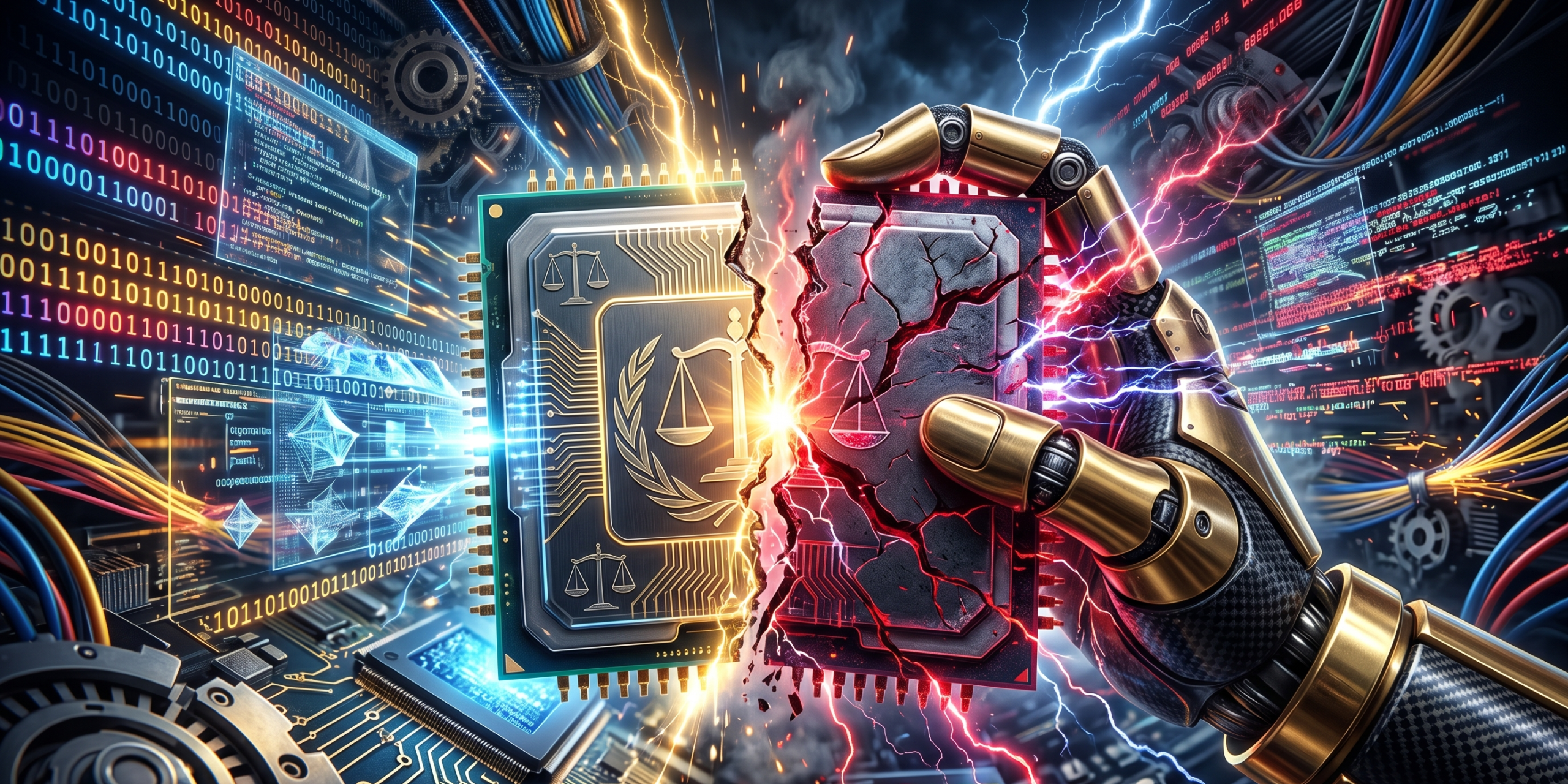
The Ethical Diagnostic is the process of transforming that Black Box into a Glass Box. It is the rigorous, clinical inspection of the internal logic gates that drive your decisions. To execute a diagnostic is to stop asking “What is the right thing to do?” and start asking “By what mechanism did I arrive at this conclusion?” By probing the mechanics of your moral reasoning, you move from being a subject of your intuitions to being the commander of your logic. You ensure that your ethical output is a product of design, not a byproduct of unexamined impulses.
The Failure of Intuitive Ethics
Intuition is a useful heuristic for low-stakes, repetitive tasks, but it is a catastrophic failure in the high-complexity theater of the sovereign professional. Relying on “gut feelings” for ethical reasoning introduces several critical vulnerabilities:
- The Proximity Bias: Intuition is biologically programmed to favor those who are physically or emotionally close to us. This leads to tribalism and “Crony Ethics,” which cloud objective judgment.
- The Recency Effect: Our intuitions are heavily influenced by the last piece of information we consumed or the most recent emotional spike we experienced. This makes our reasoning volatile and inconsistent.
- The Mimetic Trap: Much of what we call “Intuition” is actually just the echo of social pressure. We “feel” that something is wrong because we subconsciously know the collective would disapprove, not because the action itself violates a first principle.
The Ethical Diagnostic bypasses these failures by applying a systematic “Health Check” to the reasoning process itself.
Protocol I: The Source Code Audit (Origin Identification)
The first step of the diagnostic is to identify the Source Code of a specific moral judgment. When you feel a certain direction is “right,” you must pause and perform a trace.
- Internal vs. External Signal: Is this conclusion derived from your forged foundations (The Morality Forge), or is it a reactive response to an external “Social Signal”? If your reasoning changes based on who is watching, the source code is compromised.
- The Emotional Variable: Is this choice driven by a desire for Clarity or a desire for Catharsis? Many moral decisions are actually just “Emotional Venting” disguised as righteousness. If the primary driver is anger or fear, the diagnostic reveals a logic-gate failure.
- The Historical Precedent: Does this reasoning match the code you have used for similar situations in the past? If you are making an “Exception” for the current case, you must justify that exception with a new first principle, or admit that your reasoning is drifting into inconsistency.
Protocol II: The Logic Gate Test (Non-Contradiction)
A sound ethical system must be Non-Contradictory. If your reasoning for “Choice A” violates the logic you used for “Choice B,” your system is structurally unsound. The Logic Gate Test probes the “If/Then” statements of your reasoning.
- Universalization: If every operator in the market used the exact same logic you are using right now, would the market collapse or flourish? If your reasoning requires you to be a “Special Case” who breaks the rules while others follow them, your logic is predatory and unsustainable.
- The Swap Test: If the roles in this dilemma were reversed—if you were the one impacted by the decision rather than the one making it—would you still find the reasoning valid? If the logic only works in your favor, it isn’t ethics; it’s a self-serving rationalization.
- The Categorical Audit: Are you using “Categorical” logic (this is always wrong) or “Situational” logic (this is wrong unless I have a good reason)? Situational logic is the primary entry point for ethical decay. The diagnostic forces you to define the Exact Boundary where a rule is no longer applicable.
Protocol III: The Impact Projection (Outcome Simulation)
Moral reasoning is not just about intent; it is about Kinetic Impact. The diagnostic requires you to simulate the “Cascade Effects” of your choice.
- Secondary and Tertiary Effects: A choice that feels “Good” in the short term (e.g., helping a struggling team member by doing their work) often produces “Bad” tertiary effects (e.g., encouraging a culture of dependency and weakening the team’s long-term resilience).
- The Resource Drain: Every ethical choice has a “Metabolic Cost.” Does this choice expend a disproportionate amount of your sovereign capital for a marginal ethical gain? The diagnostic treats “Energy” as a variable that must be managed.
- The Integrity Debt: Does this choice create “Integrity Debt” that you will have to pay back later? If you compromise a small principle today to achieve a large goal, you are weakening your internal architecture. You must calculate if the “Interest Rate” on that debt is worth the acquisition.
Protocol IV: The Sovereign Alignment (Mission Integration)
The final stage of the diagnostic is the Sovereign Alignment. You must ensure that the mechanics of your reasoning are integrated with your primary mission. Ethics do not exist in a vacuum; they exist to support the expansion of your sovereignty and the fulfillment of your intent.
- The Autonomy Check: Does this moral choice increase or decrease your future agency? A sovereign professional does not make choices that “Paint them into a corner.”
- The Signal Fidelity: Does this reasoning broadcast the “Signal” you want your brand to represent? If you value “Hardened Logic” but your reasoning in this instance is “Soft and Reactive,” you are creating a brand-divergence that will eventually lead to market confusion.
- The Resilience Factor: Does this reasoning make you “Harder” or “Softer”? A diagnostic that leads to a choice that preserves your comfort at the expense of your growth is a failed diagnostic.
The Result: The Optimized Ethical Machine
Why is the Ethical Diagnostic essential for the elite operator? Because it creates Defensible Logic.
- Immunity to Shaming: When your reasoning is transparent and documented (even if only in your own mind), you are immune to the “Moral Shaming” of the crowd. You can say: “I have run the diagnostic. My reasoning is consistent with my first principles. Your emotional reaction is noted but irrelevant to my execution.”
- High-Speed Decision Making: In a crisis, you don’t have time to “wonder” what the right thing to do is. Because you have mastered the diagnostic process, you can run the “Logic Gates” in seconds. You move with a velocity that looks like “Intuition” to the unhardened, but is actually “High-Speed Calculation.”
- Systemic Trust: When people know that your decisions are not based on “Moods” but on a “Technical Process,” they trust your output. Even if they disagree with your conclusion, they respect the Integrity of the Mechanism.
Conclusion: Mastery of the Interior
The Ethical Diagnostic is the realization that The “How” is more important than the “What.” Anyone can stumble into a “Good” decision by accident. A sovereign operator arrives at the “Correct” decision by design.
Stop trusting your gut. Your gut is a collection of evolutionary leftovers and social conditioning. Trust your Diagnostic. Probe your mechanics, audit your source code, and stress-test your logic. When you turn the Black Box of your mind into a Glass Box of engineered intent, you become the only person in the room who truly knows why they are standing where they are standing.
Inspect the logic. Audit the origin. Own the mechanism.










Leave a Reply